
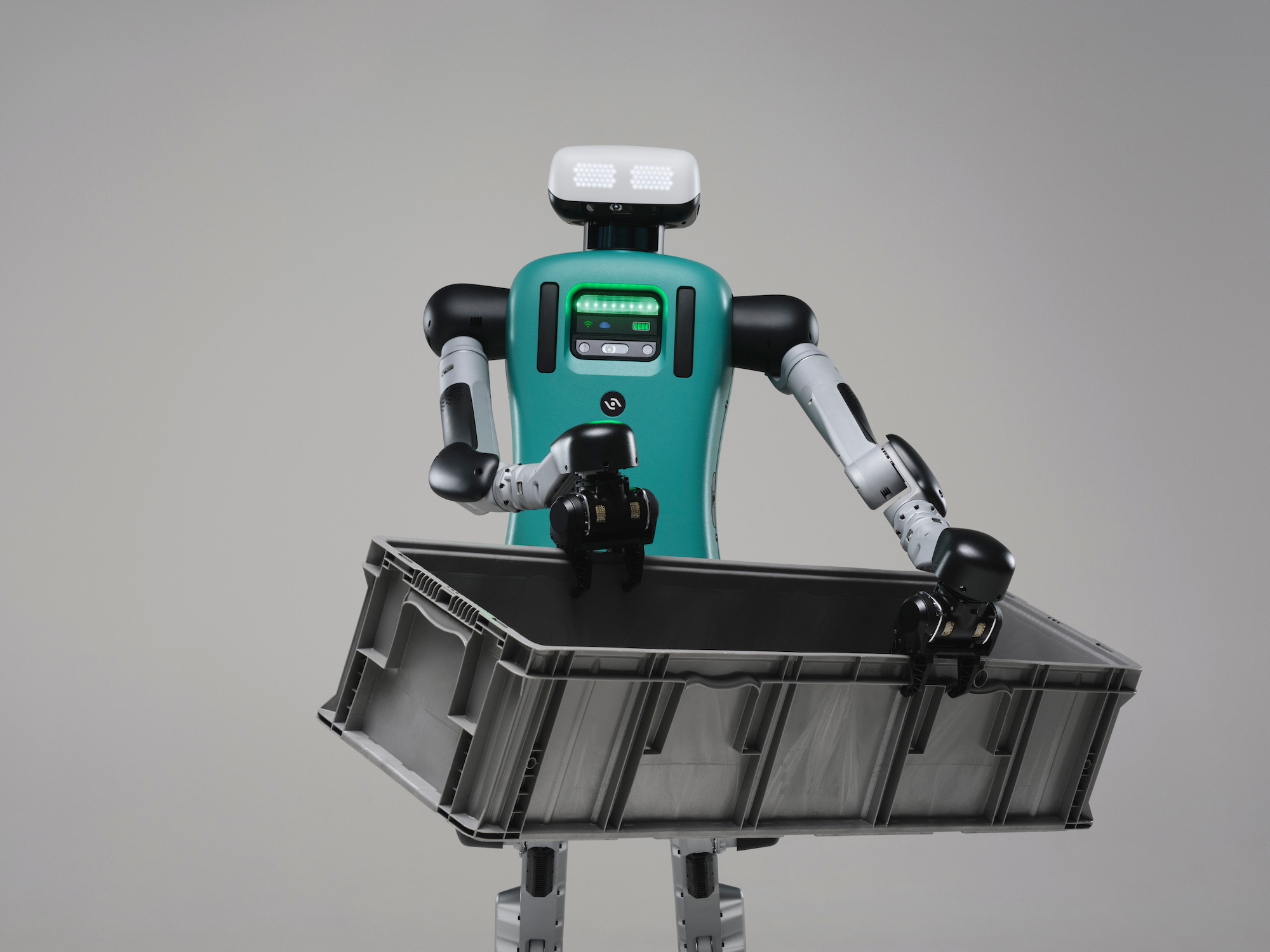
An earlier-generation Digit holding a tote. Digit 5 remains under development. Photo: Agility Robotics.
Agility Robotics’ 6 October investor event sharpened the commercial questions facing Digit 5: what must happen for its orders to become revenue, how manufacturing costs might fall and when the robot can enter wider service. The company highlights more than $300 million in potential multiyear order value, measured in May 2026 and dependent on contractual milestones.
The update comes ahead of Agility’s proposed merger with Churchill Capital Corp XI, which the company expects to close in the fourth quarter. Investors will need to distinguish commitments, production targets and cash-generating deployments.
Orders tied to deployment
The investor deck specifies that the order figure relates to 1,000 Digit 5 robots under a three-year robots-as-a-service contract. Warrants issued to the purchaser vest in proportion to robots deployed. The value is conditional future business; Digit 5 remains under development and unavailable for commercial deployment.
That structure makes deployment progress central to the story. Customer interest is meaningful, but the headline value alone cannot show how much business will be realised or when. The useful follow-up measures are machines entering service, milestones satisfied and revenue recognised, together with evidence that customers continue using the robots after the initial installation.
Component costs and production scale
The presentation puts Digit 4’s current bill of materials at approximately $125,000 and sets out an expected cost-reduction path for Digit 5. The future curve relies on engineering changes, supplier development and production volume. It is an illustrative forecast, not a record of savings already delivered at scale.
Robot Harbour’s earlier analysis of Digit’s ownership and subscription economics examined the customer-payment model. The October manufacturing slides address a different question: what Agility might spend on the components inside each robot.
Component cost does not establish a customer’s purchase price or Agility’s eventual profit. For operators, the practical question remains whether a delivered installation provides enough reliable output to justify the full bill. For the manufacturer, lower component costs must survive the demands of production, deployment and ongoing support.
Safety work and the 2027 rollout
A 1 October memorandum of understanding with FORT Robotics sets out further safety work. It covers a pendant, communications on the robot and an interface to external safety systems, with plans for joint development, compliance and deployment support.
The pendant provides a manual safety override during setup, maintenance or unexpected situations. The offboard interface is intended to connect the robot with safety equipment in its surroundings. These are parts of a planned deployment architecture; the announcement does not establish completed validation for every intended workplace.
The rollout plan begins with existing partners in the first half of 2027. EU and UK access is planned during 2027, subject to required regulatory markings, and general availability by year-end. Those are targets, with product development and conformity work still material to delivery.
The next meaningful update will be evidence that this sequence is being achieved: validated deployments, sustained operation and revenue from fulfilled commitments. That would turn a substantial statement of prospective demand into a clearer measure of the business Agility is building.