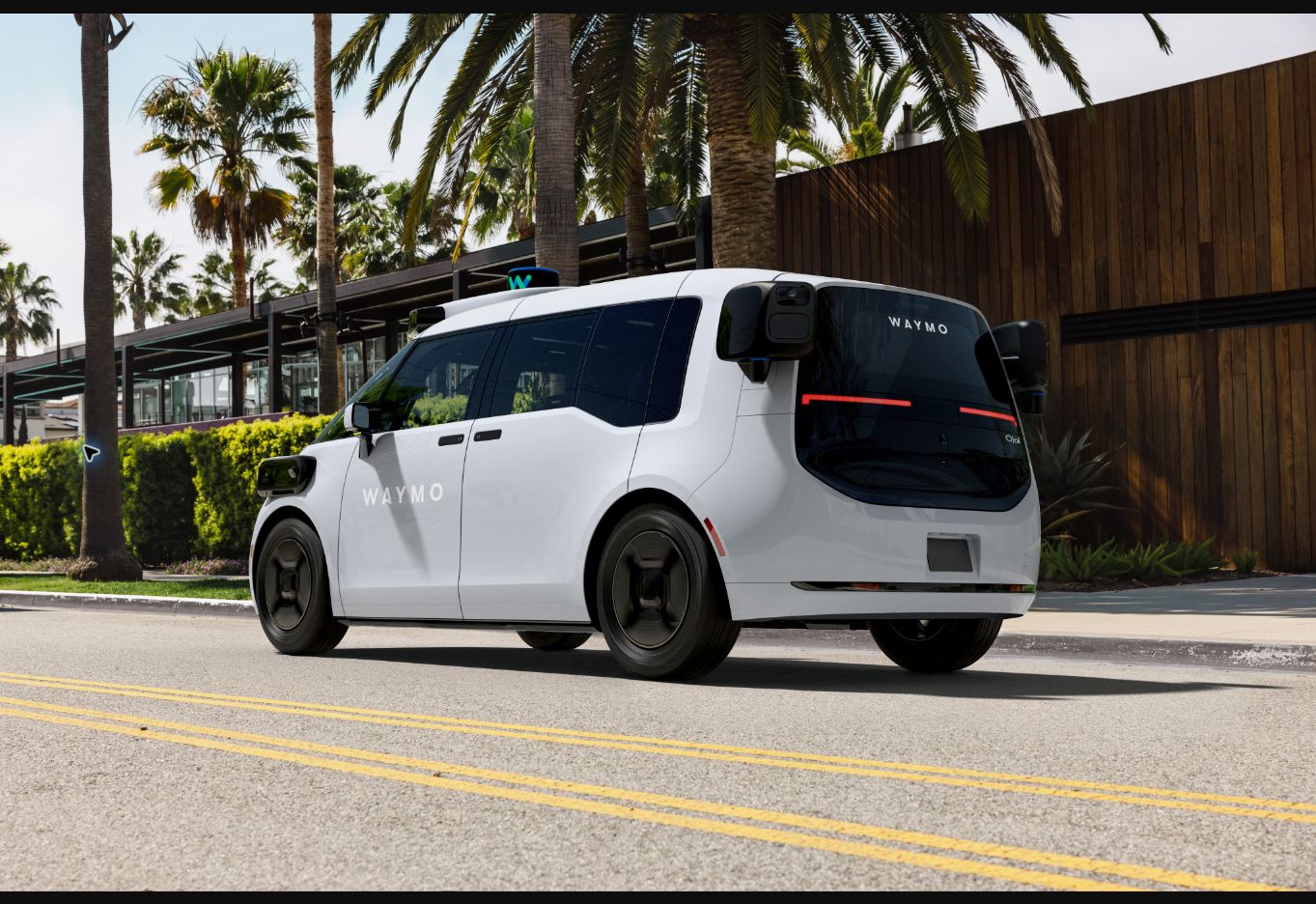
Waymo’s all-electric Ojai robotaxi. Waymo is one of three operators newly approved for paid autonomous ride-hailing in Clark County. Source: Waymo.
Nevada regulators have unanimously approved commercial autonomous ride-hailing permits for Tesla Robotaxi, Waymo and Uber-owned Aviari Services, creating first-year regulatory capacity for up to 7,000 vehicles in Clark County. The figure is a ceiling, not a deployed fleet count, and each company must still complete inspections, insurance, rate and customer-app requirements before offering paid rides.
The Nevada Transportation Authority considered the three applications on 20 August 2026. Tesla Robotaxi LLC is authorised for no more than 5,000 fully autonomous vehicles during the first 12 months after its permit is issued. Waymo LLC and Aviari Services LLC, a wholly owned Uber subsidiary, are each authorised for up to 1,000.
The decision opens the same major tourism market to three different commercial models: Tesla’s vertically integrated service, Waymo’s dedicated autonomous ride-hailing network and Uber’s marketplace approach, which connects riders with vehicles operated by autonomous-driving partners.
What Nevada approved
An Autonomous Vehicle Network Company permit allows its holder to use an app or other digital service to connect paying passengers with fully autonomous vehicles in Nevada. The new permits cover Clark County, including Las Vegas, within the operating limits approved for each company.
They are not unconditional launch orders. Before transporting the public, the companies must provide vehicle-inspection documentation, maintain the required insurance, file applicable rates and submit information about their customer-facing apps for regulatory review. They must also comply with accessibility, nondiscrimination, receipt, record-keeping and crash-reporting requirements.
The orders require operations to begin within 120 days unless the Authority allows otherwise. Each company must provide first responders in its service area with a 24-hour emergency contact.
The approved geography includes Harry Reid International Airport, but the state permit does not itself authorise airport pickups or drop-offs. An operator must separately satisfy the Clark County Department of Aviation’s requirements before serving the airport.
7,000 vehicles is a ceiling—not a rollout
The arithmetic matters. Tesla’s 5,000-vehicle ceiling plus 1,000 each for Waymo and Aviari totals 7,000 vehicles across the three new permits. It does not mean that 7,000 robotaxis have been built, ordered or deployed.
Meeting coverage indicates that none of the applicants expects to reach its maximum immediately. Tesla Cybercab chief engineer Eric Early said the 5,000 figure had always been a ceiling and that reaching roughly 2,500 Nevada vehicles within a year would represent a strong result.
The regulatory capacity also sits above a separate, pre-existing Nevada permit for Zoox. That authorisation should not be folded into the three-company total, and Uber’s Aviari approval should not be treated as proof that any specific Motional or Zoox fleet is already operating driverlessly through the Uber app.
Actual scale will depend on vehicle availability, the companies’ approved operating domains, inspections, depot and charging capacity, airport permissions and service economics.
Three competing commercial models
Tesla is seeking to operate the vehicle, autonomous-driving system and customer service under one brand. Reporting from the hearing says its initial Nevada service is expected to use Model Y vehicles before the purpose-built Cybercab is introduced. The company has not publicly confirmed a Nevada fleet size or launch date.
Waymo already operates paid driverless services in several US metropolitan areas. In Las Vegas, however, its July driverless operations began with employees rather than the general public. Its August partnership with Allegiant Stadium invited prospective riders to register their interest, signalling a forthcoming public launch rather than confirming that paid rides are already open.
Uber’s role is different. Its subsidiary Aviari holds the Nevada permit, while autonomous-driving partners supply the vehicles and driving systems. Uber and Motional began Las Vegas rides with an in-vehicle operator in March 2026 and said they expected fully driverless service by the end of the year. Uber has also announced a Las Vegas partnership with Zoox, but no reviewed first-party source confirms that Zoox rides have begun through the Uber app.
The permits therefore create a useful comparison. Tesla is betting on vertical integration, Waymo on a dedicated robotaxi network and Uber on a mixed marketplace that can combine human-driven and autonomous vehicles.
Why Las Vegas matters
Clark County offers dense tourist demand, large venues, hotels and an airport that can generate repeatable ride patterns. It is also a difficult operating environment, with heavy pedestrian activity, complex hotel pickup zones, congestion and high temperatures.
Local taxi and livery representatives opposed the applications at the hearing, raising concerns about road congestion and oversupply. Those questions will become more important if fleets move beyond small launches: permit capacity measures what regulators will allow, while completed rides, utilisation, incident rates, passenger access and effects on professional drivers will show what the market can sustain.
The decision is material because it grants market access to three major competitors in the same county. It is not evidence that their technology, business models or safety performance are equivalent.
What the decision means for the UK and Europe
Nevada’s permits confer no authority in Britain or the European Union. Great Britain opened applications for its automated passenger-services pilot scheme on 22 May 2026, with separate assessment of the vehicle, automated-driving system, operator and passenger service.
Transport for London has approved an Uber–Wayve supervised trial of up to 15 vehicles for one year. A licensed private-hire driver will remain at the wheel, so it is not a fully autonomous commercial robotaxi launch.
The contrast is useful. Nevada has created large first-year fleet ceilings, while Britain is beginning with a smaller, supervised route to evidence and public-service approval. European operators must also navigate EU vehicle type-approval requirements and member-state or local rules governing circulation and passenger transport.
For UK and European robotics businesses, the immediate relevance is commercial and regulatory rather than geographic: Las Vegas will provide evidence about how competing autonomous fleets scale, how cities manage access and how operators handle safety, accessibility and accountability.
What Robot Harbour will watch next
The next meaningful milestones are not more permit numbers. Robot Harbour will watch for the first paid public rides under each new authorisation, confirmed fleet sizes, approved service areas, airport access, driverless status, utilisation and independently reported safety performance.
It will also be important to distinguish a vehicle operating autonomously from a service being commercially available to any rider. Employee testing, supervised passenger trips, interest lists and planned partnerships are different stages of deployment.
For related coverage, see Robot Harbour’s Regulation and Safety section and its reporting on robotics developments affecting the UK and Europe.
Last verified: 22 August 2026. Fleet figures refer to first-year regulatory ceilings, not vehicles deployed.
Sources
- Nevada Transportation Authority — 2026 public notices and docket identities
- 2 News Nevada, with information supplied by the Nevada Transportation Authority — approval details and conditions, 21 August 2026
- Nevada Revised Statutes, Chapter 706B — Autonomous Vehicle Network Companies
- MarketWatch — Nevada robotaxi approvals and fleet ceilings, updated 21 August 2026
- TechCrunch — hearing report and applicant testimony, 20 August 2026
- Waymo — employee-only driverless Las Vegas operations, 8 July 2026
- Uber and Motional — supervised Las Vegas service, 13 March 2026
- UK Department for Transport — automated passenger-services pilot applications, 22 May 2026
- London Assembly — supervised Uber–Wayve trial, 5 August 2026