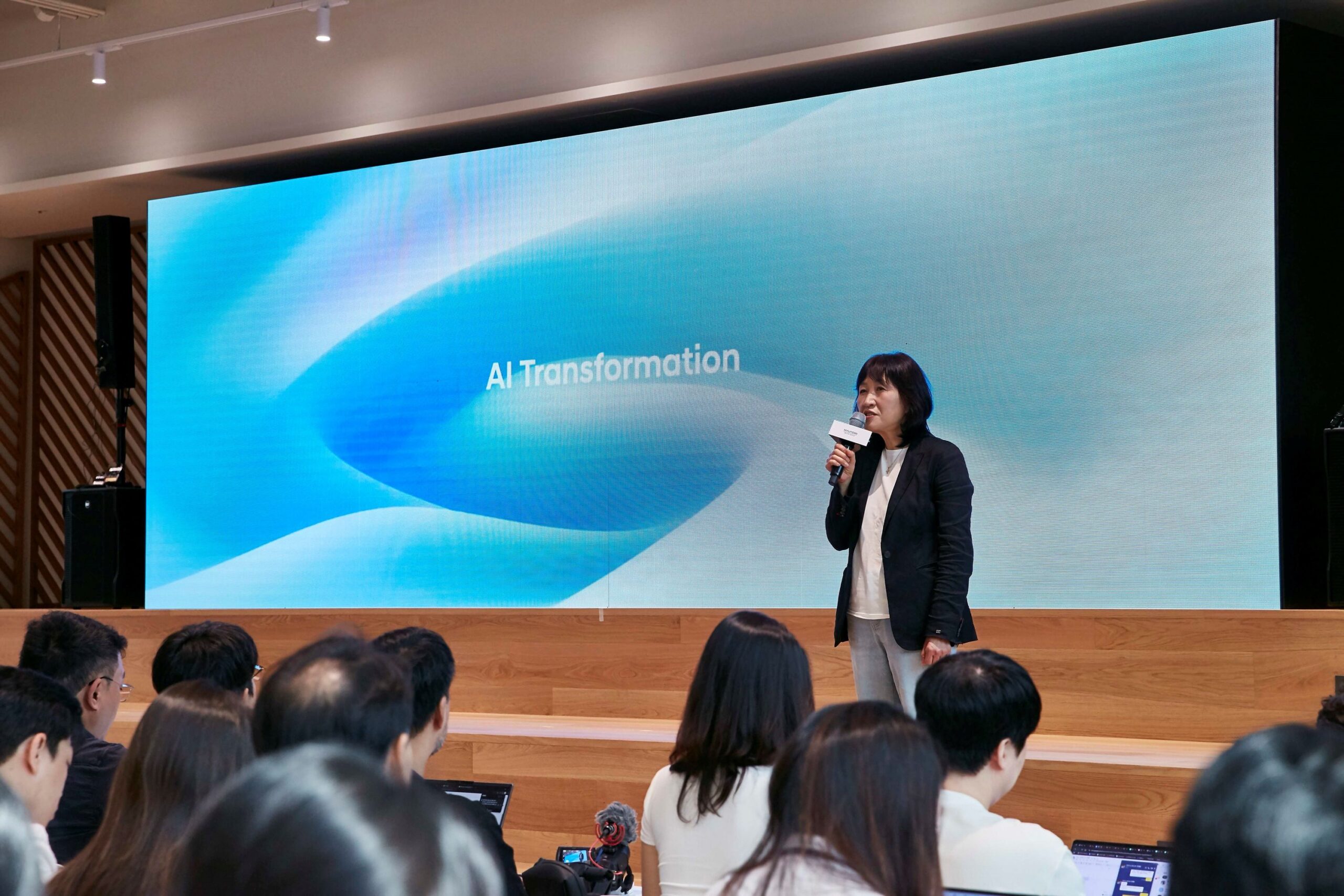
Archive photograph: Eunsook Jin, Hyundai Motor Group’s president and head of ICT Management Division, at the group’s AX Achievement Showcase on 12 August 2026. Credit: Hyundai Motor Group.
Hyundai is piloting its E-FOREST Polaris manufacturing AI platform at its new Ulsan electric-vehicle plant, according to Korean reporting, putting a named factory behind its effort to make production information easier for workers to use.
The pilot began in September, MoneyToday reported on 18 October, with Electronic Times reporting the same start date on 19 October. The system is described as helping staff interrogate information spanning factory operations, quality and equipment maintenance. Neither report provides a measured productivity gain or a cost comparison for the Ulsan trial.
The commercial question is whether that access helps engineers resolve problems more reliably and quickly. A conversational interface can make information easier to retrieve; its value on a factory floor depends on whether the answer is correct, current and safe to act upon.
From platform announcement to named pilot
Polaris was already public before this week’s exhibition. In an August announcement, Hyundai Motor Group described a platform through which production engineers could build, test and deploy AI agents using manufacturing expertise. It said those agents could incorporate knowledge from scheduling, quality management, maintenance and logistics for use in production environments.
The newly reported Ulsan pilot gives that broader programme a specific site and start date. It does not establish that every proposed function is in routine use there, or that the platform has completed operational acceptance.
Hyundai and Kia’s official 18 October E-FOREST TECH DAY announcement describes factory-specific AI agents for retrieving and interpreting data, searching manufacturing knowledge and creating equipment manuals. The event runs from 19 to 21 October at Uiwang. That release confirms the wider factory-software programme, but does not itself name the Polaris pilot at Ulsan.
What the evidence shows
MoneyToday describes Polaris as bringing together information held across manufacturing systems and drawing on internal documents and specialist know-how to answer workers’ questions. That is a defined industrial application: helping people find and interpret operational knowledge in the context of a factory.
Electronic Times also describes an exhibition demonstration in which a voice request produced production-status information in about a second, alongside displays of operating rates, defects and troubleshooting guidance. That observation concerns a demonstration booth. It does not establish response times, diagnostic accuracy or reliability across shifts at Ulsan.
The distinction matters for the term “agent”. The available reporting does not establish what changes Polaris can make directly to production systems, which actions require human approval, or how incorrect recommendations are handled. Readers should not infer autonomous control of machinery from a successful information-retrieval demonstration.
This places the story within applied AI in industry. It overlaps with the data and software foundations described in our Physical AI guide. Its immediate task is supporting decisions about physical operations.
The business case still needs operating results
Robot Harbour’s assessment is that the potential value lies in the work between detecting a problem and resolving it. A useful pilot would measure time to a correct diagnosis, repeat faults and escalation to specialists against the existing process. Fast answers alone would be an incomplete measure.
Costs also need to include connecting systems, preparing documents, controlling access, evaluating answers and keeping knowledge up to date. None of the reviewed announcements establishes those costs for Polaris. Nor do they disclose Ulsan’s user count, error rate, intervention frequency or a sustained operating record.
For UK manufacturers and integration businesses, this is a practical example to follow. The sources reviewed do not announce a British or European external sales channel, price or support programme for Polaris. Hyundai’s internal use does not by itself make the platform available to other factory operators.
The next evidence to look for is a comparison of completed work before and after adoption, with unsuccessful queries and human corrections included. As with the deployment costs explored in our Scan and OLO analysis, the commercial test is the cost and dependability of the whole workflow.
Reporting basis: Hyundai’s linked August and October announcements, plus attributed reporting from MoneyToday and Electronic Times. The Ulsan pilot details come from those publications; Robot Harbour has not visited the site or independently tested Polaris. Evidence reviewed on 20 October 2026.