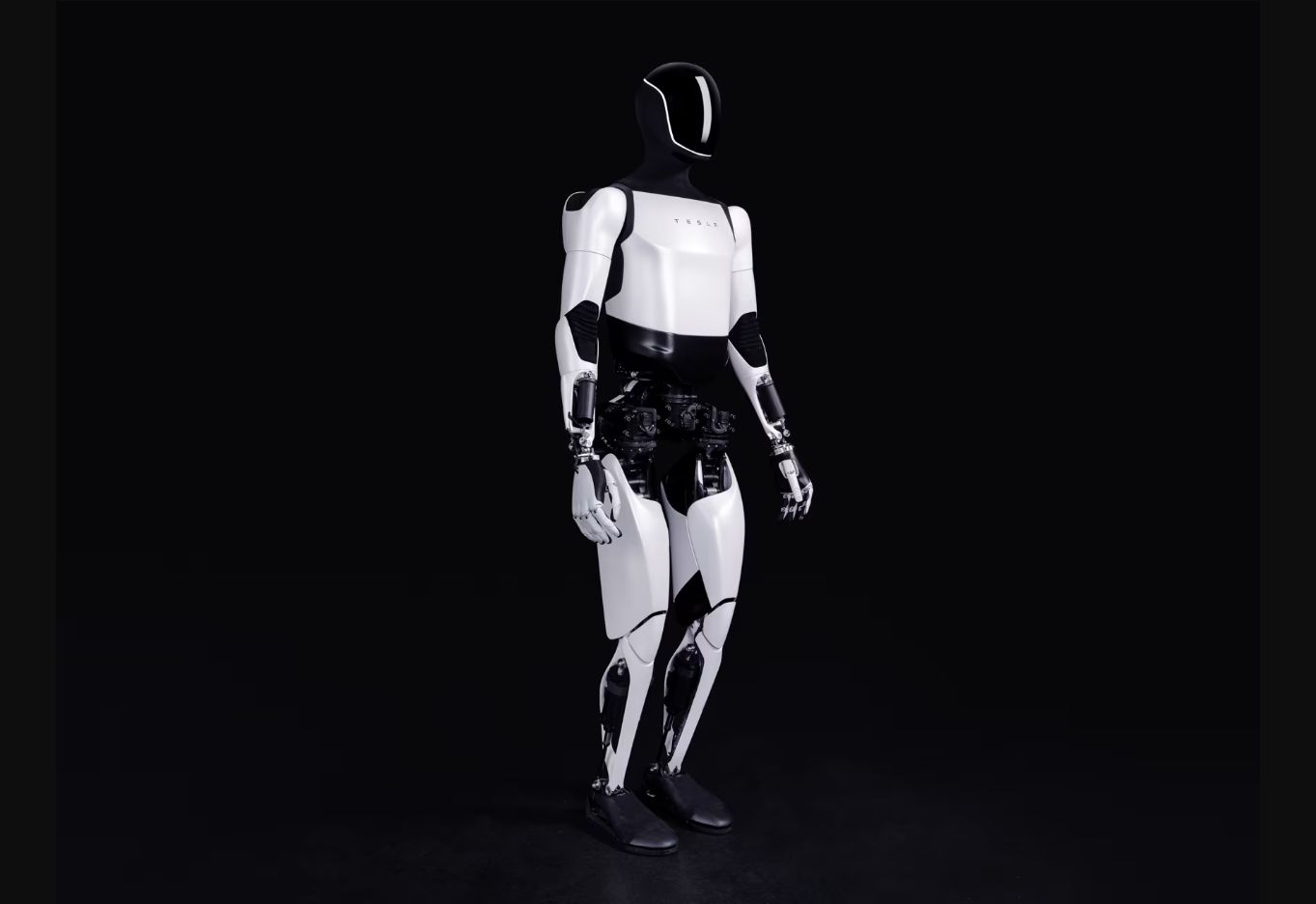
Image: Tesla.
Tesla says it is installing the first production lines for Optimus at its Fremont factory and anticipates production later in 2026. But the first robots are not being prepared for customer delivery: they are intended for an internal training programme that Tesla calls the Optimus Academy.
That distinction matters. Optimus is one of the most closely watched humanoid projects in the world, backed by a company with unusual manufacturing scale, AI infrastructure and access to capital. Yet the latest disclosure describes a pre-commercial engineering phase, not a product launch.
What Tesla confirmed in its Q2 2026 update
Tesla’s latest shareholder material says the Model S and Model X manufacturing lines at Fremont have been decommissioned and that first-generation Optimus production lines are being installed in their place. It says production is anticipated later in 2026, without giving a confirmed start date or an output schedule.
The same update says the first manufactured units will enter Tesla’s Optimus Academy to collect training data and support further functionality development. These robots may help Tesla improve manipulation, navigation and task performance inside its own operations, but an internal data-collection fleet is not the same as a commercial deployment.
In its regulatory filing for the quarter ended 30 June 2026, Tesla describes Optimus as a general-purpose autonomous humanoid and says it is preparing for and investing in large-scale production. The filing places the programme inside a broader 2026 capital-expenditure plan of more than $25 billion spanning AI compute, manufacturing, research and development, and other infrastructure.
Why this is not yet a commercial launch
A factory line can be a meaningful milestone without proving that a finished product is ready for sale. Tesla has not published a customer order page, a quotation process, a confirmed selling price, production-version specifications, a warranty or service package, or a timetable for external deliveries.
It has also not identified a paying customer or independently verified external deployment. The available evidence therefore supports a prototype classification: Tesla is moving towards repeatable manufacturing, while the initial units remain part of its own development programme.
Confirmed facts, forecasts and missing details
Confirmed
- Tesla is installing first-generation Optimus production lines at Fremont.
- The first manufactured units are intended for internal training-data collection and further development.
- Tesla describes Optimus as a general-purpose, bipedal autonomous humanoid designed to navigate, perceive and interact with the physical world.
- The company says it is investing in manufacturing capacity for the programme.
Company forecasts
- Production is anticipated later in 2026.
- Large-scale manufacturing is a stated objective, rather than a demonstrated current capability.
- Very large long-term production and cost claims remain projections until supported by delivered machines and customer evidence.
Not announced
- A confirmed customer price or order date
- Production-version height, weight, payload and operating time
- First external customer delivery
- Commercially supported tasks, service terms and warranty arrangements
- UK or European sales and support
Why Tesla still matters
There are good reasons to take the programme seriously. Tesla already operates high-volume factories, develops its own AI training systems and deploys vision-based autonomy across a global product fleet. It can fund hardware iterations and manufacturing equipment at a level unavailable to most robotics start-ups.
Those advantages do not remove the hard parts of humanoid robotics. Reliable manipulation, safe operation around people, useful task speed, maintainability and total cost of ownership all need to be demonstrated over sustained deployments. Moving from a controlled demonstration to dependable daily work is where many robotics programmes face their most difficult engineering and commercial tests.
No UK or European route yet
Tesla’s established vehicle and energy presence in Britain and Europe does not imply regional availability for Optimus. Robot Harbour has found no announced preorder, external pilot, authorised service programme or sales route for the robot in either market. For buyers and operators, Optimus should be treated as unavailable.
The Robot Harbour view
Optimus belongs in any serious account of the humanoid market. Tesla’s manufacturing commitment makes the programme strategically important, and the installation of production equipment is more substantial than another stage demonstration. But the evidence still points to an internal, pre-commercial phase.
The next decisive signals will be repeatable output from the Fremont line, disclosed production specifications, named external customers and robots performing useful work over time. Until then, Tesla’s later-2026 production target should be reported as a company forecast rather than a completed launch.
Last verified: 6 August 2026. Robot Harbour checked Tesla’s Q2 2026 shareholder update, its Form 10-Q for the quarter ended 30 June 2026 and the official Tesla AI and Robotics page.