Photo Credit: Boston Dynamics.
SoftBank sold its remaining 9.65% stake in Boston Dynamics in the third quarter, leaving Hyundai Motor Group chairman Euisun Chung and group companies with all the shares, according to Korean press reports citing Hyundai Glovis’s quarterly filing. Hyundai already controlled the robot maker. What changes is that the group preparing to put Atlas to work in its car plants no longer has an outside shareholder in the company building it.
The sale closes a transaction that was still under review in July. At the time, Hyundai said SoftBank had exercised its contractual right to sell. On 17 November, The Korea Herald and Financial News reported that the remaining shares had passed to Chung, HMG Global and Hyundai Glovis. The shares are held collectively; Hyundai Motor Company alone does not own Boston Dynamics outright.
A Glovis representative confirmed to Korean business publication Bloter that the exercise of SoftBank’s option increased Glovis’s holding. Its stake rose from 11.39% at the end of June to 12.47% at the end of September. The 46.5 billion won Glovis invested in the quarter was its own outlay, not the price of SoftBank’s entire holding.
What Hyundai can test in its own factory
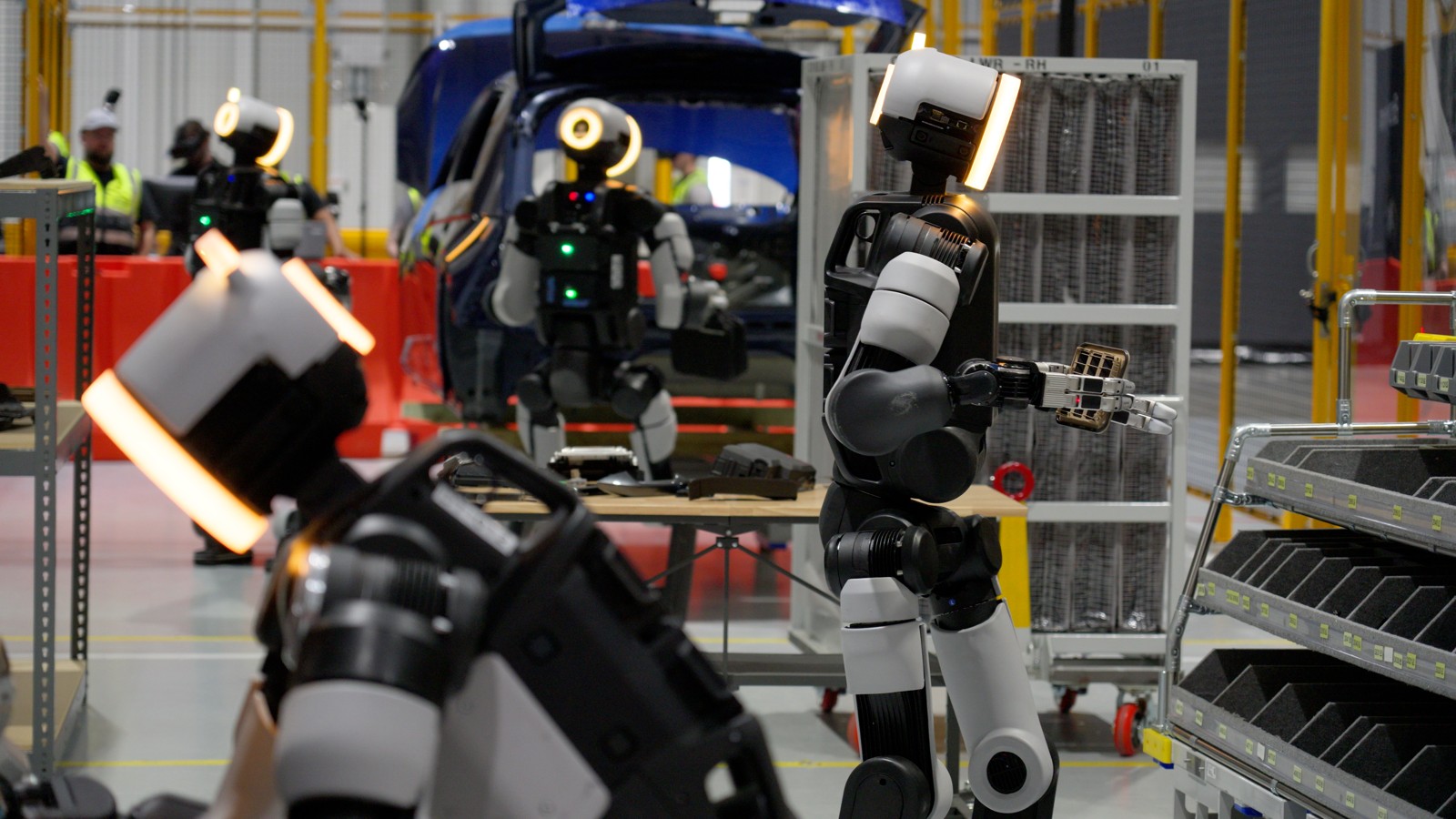
An owner with car plants can give Atlas something a laboratory cannot: repeated work on a production timetable. At Hyundai’s Georgia manufacturing campus, Boston Dynamics is training the humanoid to put automotive parts in the order needed for assembly. Hyundai has targeted 2028 for deployment there. The training centre is operating; routine production at that site is a separate milestone.
Sequencing parts offers a straightforward test. A robot might pick the correct components on most attempts and still hold up a line if a worker has to leave another station to recover a missed pick. The useful figures would be complete sets delivered on time per shift, how often a person intervenes and what each accepted set costs compared with the plant’s existing process. Hyundai has not published those results in its announcements.
The scale of the investment makes those numbers matter. Bloter reported that Boston Dynamics recorded revenue of 136 billion won and a net loss of 626.6 billion won for the first nine months of 2026. Those figures cover the whole company, including its Spot inspection and Stretch warehouse businesses. They cannot tell a factory operator what it costs to run one Atlas.
For a UK buyer, the ownership change leaves the procurement question open. There is no UK Atlas price, delivery date or local service agreement in the announcements. The next useful evidence would be results from an ordinary shift at Hyundai, followed by terms on which a factory outside the group can buy and support the same system.
Related reporting: Boston Dynamics company profile · Inside the Atlas factory-training programme.